
How Smart Is Your Baby?
The books, personal experiences, how-to project and eight family videos that shaped Dr. Miller’s approach to supporting early development.
Why How Smart Is Your Baby? mattered to our family
If you are a new parent or expecting a child, How Smart Is Your Baby? offers a detailed way to think about early sensory and motor development. It influenced the activities, personal observations, videos and practical project preserved on this page.
Every child has individual timing
Every baby develops at an individual pace. These experiences should never become a comparison, competition or rigid schedule for another child.
Parents can create opportunities
Dr. Miller’s central message is that parents can provide loving opportunities for vision, hearing, language, movement and connection rather than assuming development is entirely passive.
Observe the baby’s response
The baby’s cues guide the activity. Pause when the baby is tired, distressed or no longer interested. The relationship matters more than completing an exercise.
Being an educated parent
How to Raise a Healthy Child in Spite of Your Doctor encouraged parents to understand what is routinely offered to newborns instead of discovering it only after the birth. The purpose here is informed consent and thoughtful questions – not promotion of a vaccine, drug or procedure.
Ask what is routinely used and why
Parents are reminded that medication may be placed in a newborn’s eyes soon after birth. Parents can ask what product is used, what concern it is intended to address and how maternal testing or local requirements affect the decision.
Understand the available approaches
The original article discussed asking about oral drops rather than an injection. Formulations and protocols are not interchangeable, so this page does not provide a do-it-yourself dose or claim that every route offers identical protection. The important point is to ask questions before the birth.
Know what may be offered
The hepatitis B vaccination is often discussed or offered soon after birth. This page does not promote that vaccination. It preserves Dr. Miller’s point that parents should understand what is proposed, why, the timing and the information relevant to their family.
Protect the first connection when circumstances allow
Placing a stable newborn directly on the mother’s chest can support bonding, warmth and the transition after birth. The original article encouraged making this preference known before delivery.
Allow time for bonding and transition
The original guide encouraged waiting approximately 12-24 hours before the first bath when circumstances allow, preserving the newborn’s natural skin coating and uninterrupted early contact.
Ask about waiting for the cord to stop pulsing
The original article encouraged parents to discuss waiting until the cord has stopped pulsing and collapsed before cutting it, when the condition of mother and baby allows. The exact timing can vary.
Supporting the developing senses
The book describes development as a process of giving the nervous system repeated opportunities to receive and organize information. Dr. Miller’s family used simple light, sound and language activities as part of daily interaction.
Light and dark language activity
Using a dimmable room light, the family gently changed the ambient light while clearly saying “Light” and “Dark.” The activity connected a visual change with spoken words and later with counting.
Use only a comfortable room-light change. Never shine an intense light directly into a baby’s eyes, and stop if the baby appears uncomfortable or overstimulated.
Simple sounds and clear words
The family used simple sounds, including wooden blocks, while naming what the baby was hearing. The goal was to provide a clear auditory experience and loving interaction, not to use loud or startling noise.
Vision: one of the simplest, however most important activities
This activity was performed regularly from the early newborn period until the family felt the baby’s vision had matured. It was fun but required several hands. Dr. Miller believed that earlier visual engagement opened the door to more learning and enjoyment. This is a personal family observation, not proof that another infant will see earlier or more clearly.
Why the book emphasized early movement
The book connected movement with development of the nervous system, breathing, strength and coordination. Dr. Miller’s infant showed a desire to push and crawl very early, and the family experimented with reducing gravity’s resistance through an inclined crawling track.
Movement was offered, not forced
The baby was asked through observation and interaction whether he wanted to continue. Crying and changes in tone were treated as communication. As the family learned his sounds, they became better at recognizing when to stop.
Progress was never a comparison
The videos show selected moments from one child. Every child develops with individual nervous-system timing, and parents naturally tend to save and share the best days.
Building the family crawling track
Materials used for the crawling track
- One sheet of smooth-finish plywood, 3/4 inch thick and 8 feet long
- One-inch high-density upholstery foam, enough to cover the four plywood pieces
- Easy-to-clean upholstery fabric, such as vinyl or leather-like material, using dark and light colors for visual contrast
- Upholstery staple gun and staples
- Utility knife
- Upholstery sewing machine, optional
- Table saw, or request the cuts when purchasing the plywood
- Drill
- Approximately 50-100 2 1/2-inch Torx-head deck screws
Measurements and assembly steps
- Cut the plywood: one base piece 16 inches wide by 96 inches long; two side pieces 6 inches wide by 95 inches long; and one end cap 6 inches wide by 16 inches long.
- Prepare the upholstery and foam: cut strips to fit all four pieces, leaving enough overlap to staple the material securely.
- Wrap each piece: fit the foam and fabric snugly around the plywood and staple from the underside. The family added contrasting 10-inch light strips over dark upholstery to create visual markers.
- Attach the end cap: screw the end piece securely to one end of the base.
- Attach the side rails: screw upward from the underside of the base into the rails and into the end cap, keeping all exposed surfaces smooth and padded.
- Check the entire structure: verify that no screw, staple, hard edge, gap or loose fabric is accessible to the baby.
- Supervised setup: the family initially demonstrated an incline of roughly 30 degrees. Any angle or use must remain stable, continuously supervised and limited to awake activity.
Two books that influenced Dr. Miller’s approach
Amazon affiliate disclosure: These are affiliate links. Dr. Miller may earn a commission from qualifying purchases at no additional cost to you.

Early development
How Smart Is Your Baby?
Glenn and Janet Doman’s guide inspired the sensory activities, movement observations and crawling-track project documented on this page.

Informed parenting
How to Raise a Healthy Child in Spite of Your Doctor
Robert Mendelsohn’s book encouraged parents to ask questions, understand routine interventions and take an active role in family health decisions.
Eight videos with the original context restored
These videos document one family’s observations. They do not establish a universal milestone schedule or treatment protocol.
Light, dark, numbers and new words
The family practiced the light-and-dark activity regularly from birth. It was enjoyable but required several hands. Dr. Miller felt earlier visual engagement opened the door to more learning and enjoyment.
Wants to crawl
The book emphasized movement and the breathing centers. The family observed the baby’s early desire to push and move. Dr. Miller also periodically used a low-level cold laser from his office to observe whether he noticed a difference; this is preserved as a personal observation, not an infant-treatment recommendation.
Learning the baby’s communication
The family initially viewed some exertion sounds as part of the effort. More importantly, the baby was never forced to continue. If he cried or signaled that he did not want the activity, the session stopped.
Head control and growing strength
This video records early head and trunk movement. No parent should compare a child with these clips. Every child develops at an individual speed and with individual nervous-system timing.
The coffee-table incline
At this stage, one end of the track was approximately coffee-table height and the other was on the floor, creating an incline near 30 degrees. The black-and-white checkerboard in the background came from the book’s visual-stimulation instructions.
Each stage became more difficult as weight increased. Strength and body-weight ratios were constantly changing – and, like every proud parent, the family saved the best days to share.
A parental mistake and an important lesson
Looking back, Dr. Miller recognized from the baby’s cry that he was not in the mood for the activity that day. The session still contained love, but the video became an honest lesson: as parents know their baby’s sounds better, they must listen and respond better.
Gravity and weight continue to change
The family adjusted the track height as the baby’s weight and strength changed, trying to provide movement opportunity without letting his feet become overbalanced.
Beginning the full crawling motion
The baby was beginning to lift his entire body and coordinate the crawling pattern. By this time, the family observed that he wanted the activity more than once per day.
Move easily from fertility through pregnancy and early development
These three guides are designed to work together. Start with the stage that fits your family now, then move directly to the next resource whenever you are ready.
Fertility and Ovulation
Understand cycle timing, the fertile window, waking temperature and ovulation predictor kits.
Pregnancy Guide
Continue into pregnancy-adapted chiropractic care, nutrition, postpartum support and practical resources.
Baby and Early Development
Explore informed newborn choices, early sensory activities, movement, books and the family video journal.
Use the books as tools for thoughtful parenting
The lasting value of this page is not making every baby follow one protocol. It is helping parents become observant, engaged, informed and intentional.
From the Desk of Dr. Dylan Miller
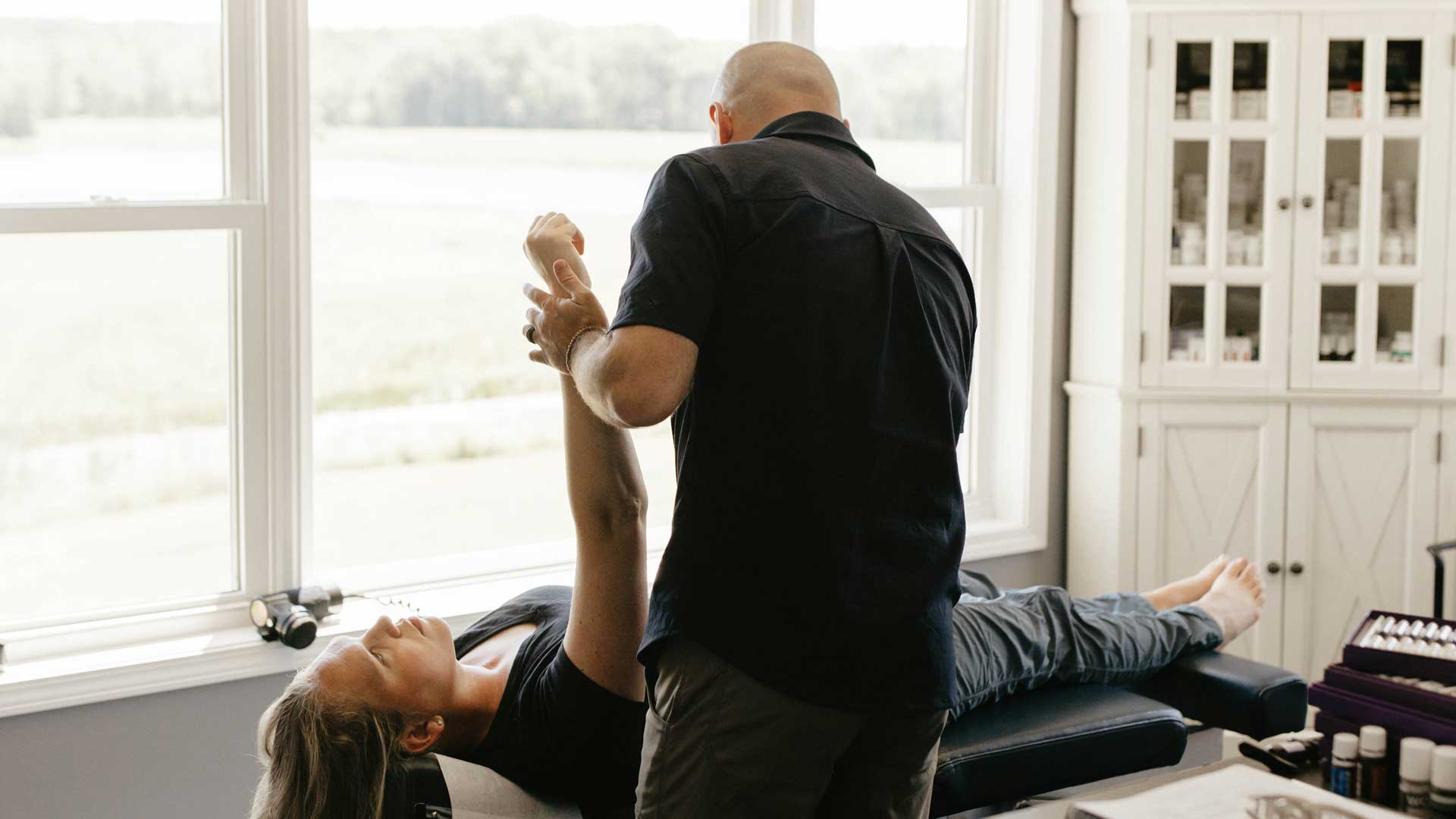
If Dr. Miller’s practical, testing-based approach resonates with you, use the visit guide to understand the process and choose the clinic pathway that fits your needs.
The goal is a clear baseline, focused recommendations and honest reassessment—not a one-size-fits-all plan. Learn what to expect before you schedule.
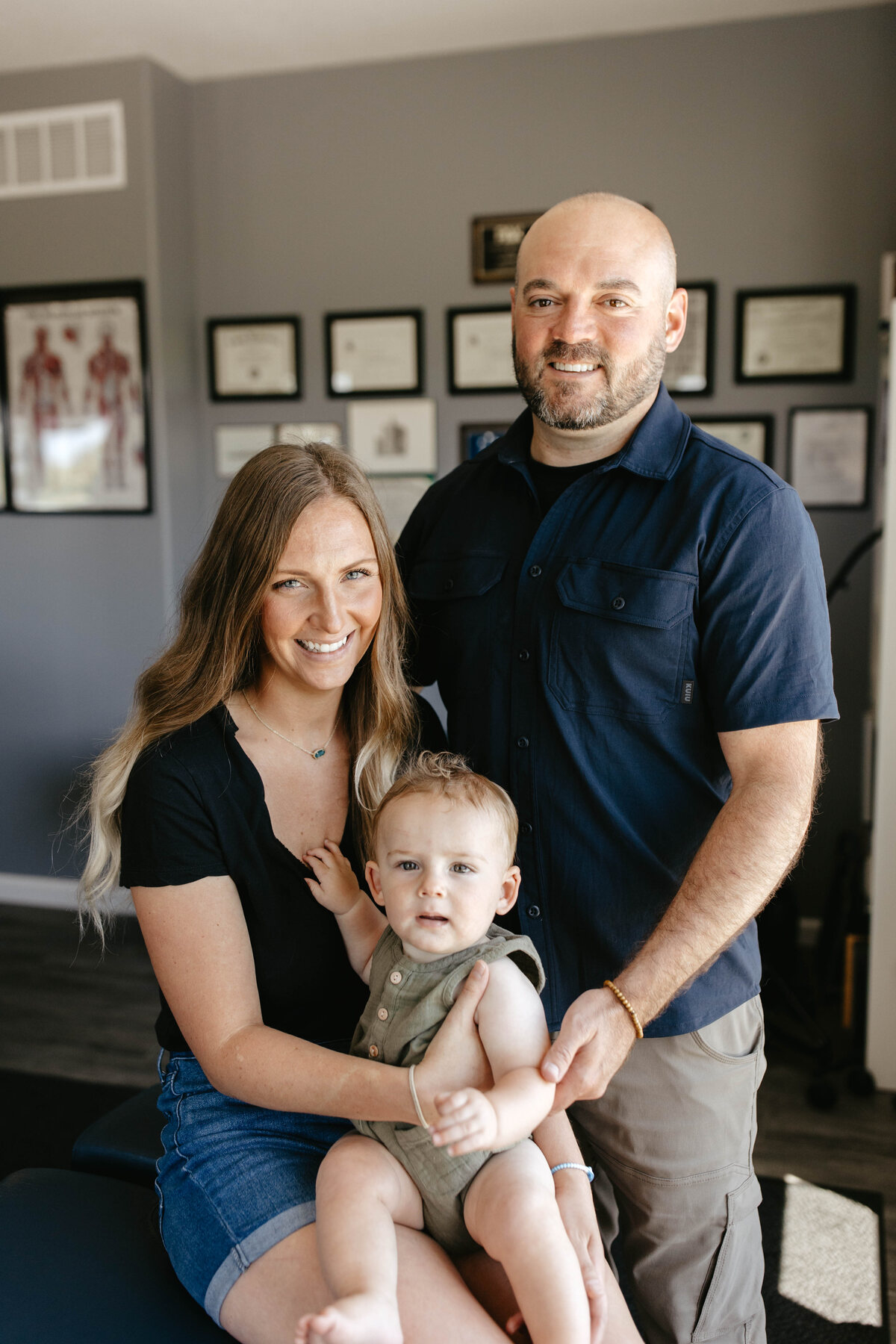
A Practice Built Together
The practice may carry Dr. Miller’s name, but it has never been a one-person effort. Chelsea Miller, Operations Manager, leads office operations, patient scheduling and communication, and the practice’s social media—helping people feel welcomed and cared for from their first contact.
Together, Dylan and Chelsea support patients through the Grant City, Missouri, and Des Moines, Iowa locations.