
Grounding – A Practical Guide
Dr. Miller’s complete guide to outdoor grounding, his original basement setup, what he learned through ohm-meter and EMF testing, and how to evaluate an indoor product without confusing continuity with electrical safety.
Grounding means creating direct conductive contact with the Earth
People most often practice grounding by walking barefoot on grass, soil or sand, sitting on the ground or entering natural water. Indoor products attempt to create a conductive path through a mat, sheet, bracelet or other surface.
What people report
Grounding users commonly describe relaxation, easier sleep, less discomfort and a stronger sense of connection with the outdoors.
What has been studied
Small studies have explored sleep, stress, heart-rate variability, inflammation and blood measures. The questions are interesting, but the evidence is not yet strong enough to promise treatment of a specific disease.
What is already valuable
Outdoor time can also bring movement, daylight, fresh air, quiet and a deliberate pause. Those benefits matter even while the separate electrical-grounding hypothesis continues to be studied.
Try direct outdoor contact first
Place a toe, finger, hand or larger area of bare skin on grass, soil, sand or natural water. Unsealed concrete may conduct when it has a genuine path to Earth, but coatings, liners, vapor barriers and dry construction can interrupt that path.
Choose a safe surface
Avoid sharp objects, pesticides, contaminated soil, extreme temperature and areas where a fall or electrical hazard is possible.
Pair it with daily life
Read, stretch, sit quietly or exercise outdoors. Grounding does not have to become a complicated ritual.
Observe your response
Notice comfort, relaxation and sleep over time. A personal response is meaningful experience, but it is not automatically proof of a medical mechanism.
A wire can pass a basic continuity test and still deserve a closer look
After experimenting with grounding leads, Dr. Miller used an ohm meter and EMF meter to compare different routes and locations. He observed that a lead could appear electrically continuous while its readings changed near walls, floors and other wiring. These are his own field observations—not claims supplied or endorsed by a grounding-sheet manufacturer.
What an ohm or continuity test answers
It can show whether there is a conductive path between two test points and whether resistance is open, high or low under that test condition.
What it does not answer by itself
It does not prove that the Earth connection is correct, that an outlet is properly wired, that there is no leakage current, or that a long lead is not coupling with nearby energized wiring.
Why a meter may show “phantom” voltage
A high-impedance digital meter can detect capacitively coupled voltage on a wire routed near energized conductors. A low-impedance mode can help an electrician distinguish a weak induced reading from a source capable of supplying current.
Why insulation is not the whole answer
Heavier insulation helps prevent direct electrical contact and physical damage, but insulation alone does not reliably block electric or magnetic fields. Routing, separation, conductor geometry, shielding and the actual ground source may matter more.
Use a verified source, a purpose-built connection and thoughtful routing
Verify the source
Do not assume a three-prong receptacle, concrete slab, plumbing pipe or utility ground is correct. Have questionable wiring or unexpected readings checked by a qualified electrician.
Use purpose-built equipment
Follow the product’s current instructions. A body-contact system should include the manufacturer’s intended safety resistance and connector rather than an improvised direct connection to a wall outlet or electrical panel.
Route away from wiring
Keep leads away from extension cords, power strips, chargers, transformers and known wall or floor wiring when practical. Avoid damaged cords and trip, child or pet hazards.
Dr. Miller’s aluminum-block basement setup
Dr. Miller’s setup used a 1/2-inch × 4-inch × 12-inch aluminum bar resting on exposed basement concrete, a lay-in connector and speaker wire extending to a grounding bracelet. The full equipment list appears below; the testing section explains why the Earth path and surrounding electrical environment should be verified.
1. Place the aluminum block
Dr. Miller chose aluminum for price, weight, ease of drilling, resistance to visible tarnish and appearance. A slab may be isolated from soil by a vapor barrier, so direct contact with uncoated concrete does not by itself prove an Earth connection.
2. Attach the lay-in connector
The original method used a self-tapping metal screw and, when needed, a small pilot hole. Secure the hardware and cover sharp edges.
3. Add and route the conductive wire
Expose only the wire needed for the connector, protect the rest from damage and route it away from energized wiring, moisture and walking paths.
4. Connect the bracelet
The original method clipped a grounding bracelet to the extended wire. Confirm that the system includes an appropriate safety resistor and verified source before any body contact.
Original tools and book
- Aluminum bar
- Lay-in connector
- Wire stripper
- Speaker wire
- Grounding bracelet
- Drill
- Drill bits
- Self-tapping metal screws
- Screwdriver bit set
- The Earth Prescription
As an Amazon Associate, Dr. Miller may earn from qualifying purchases. These product links are provided as resources; a link is not a guarantee that a homemade setup is electrically suitable.
Grounding references
- Chevalier G, Sinatra ST, Oschman JL, Delany RM. Earthing (grounding) the human body reduces blood viscosity—a major factor in cardiovascular disease. Journal of Alternative and Complementary Medicine. 2013;19(2):102–110. doi:10.1089/acm.2011.0820.
- Oschman JL. Can electrons act as antioxidants? A review and commentary. Journal of Alternative and Complementary Medicine. 2007;13(9):955–967. doi:10.1089/acm.2007.7048.
- Sinatra ST, Zucker M. Earthing: The Most Important Health Discovery Ever? Basic Health Publications; 2014.
- Antell J. Adjuvant Protocols for Healing. Digital Reference Edition; 2020.
Electrical-testing and safety references
Ground outdoors simply; test indoor systems carefully
Dr. Miller’s experience is why this page goes beyond a continuity check. The goal is to make the practice and equipment guide more thoughtful, transparent and electrically safer.
From the Desk of Dr. Dylan Miller

If Dr. Miller’s practical, testing-based approach resonates with you, use the visit guide to understand the process and choose the clinic pathway that fits your needs.
The goal is a clear baseline, focused recommendations and honest reassessment—not a one-size-fits-all plan. Learn what to expect before you schedule.
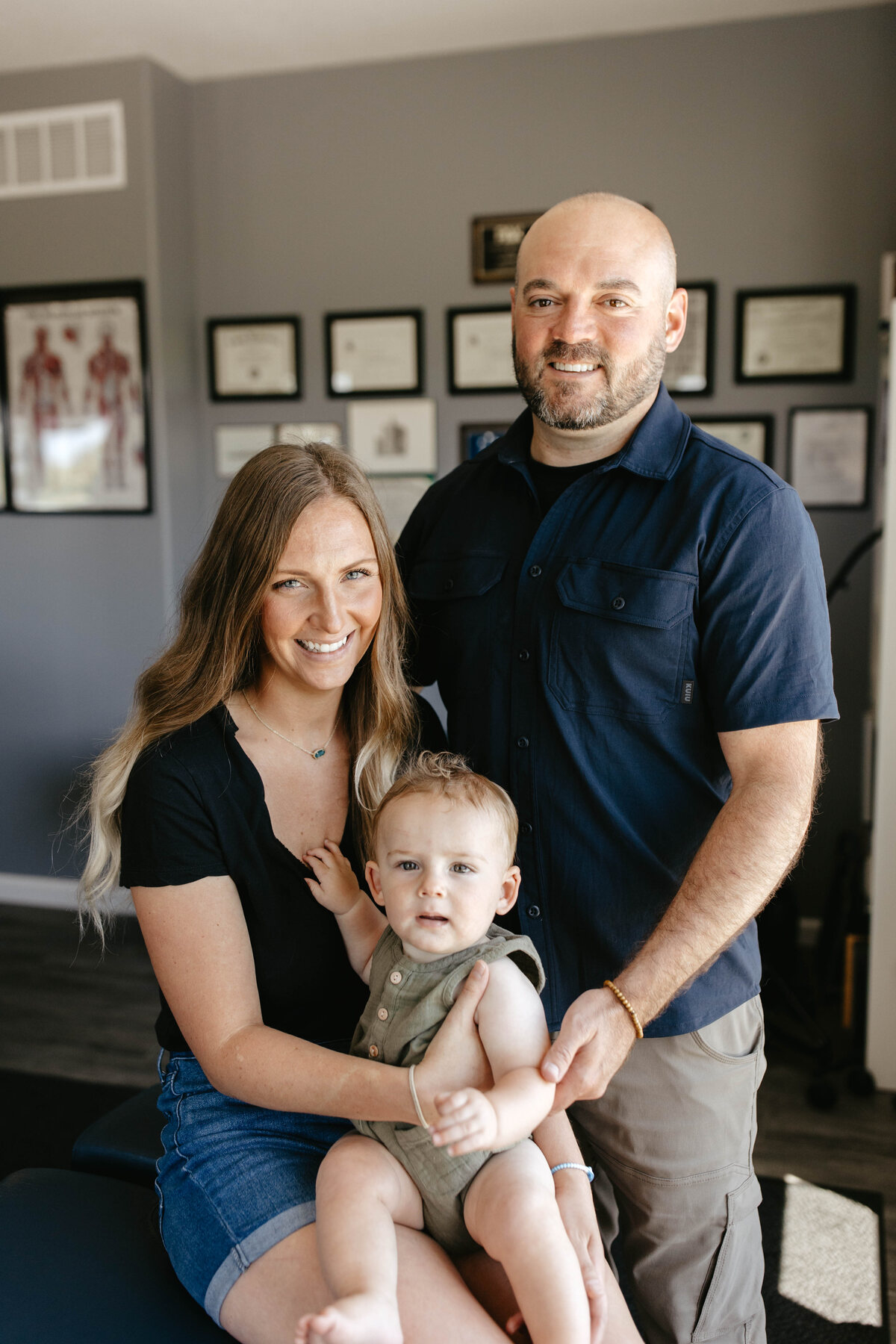
A Practice Built Together
The practice may carry Dr. Miller’s name, but it has never been a one-person effort. Chelsea Miller, Operations Manager, leads office operations, patient scheduling and communication, and the practice’s social media—helping people feel welcomed and cared for from their first contact.
Together, Dylan and Chelsea support patients through the Grant City, Missouri, and Des Moines, Iowa locations.