
Exploring Homeopathy
A respectful guide to “like cures like,” energetic-signature theory, ten traditional remedies and thoughtful individualized use.
Homeopathy looks for a remedy pattern that resembles the person’s symptoms
The tradition is built on the principle “like cures like”: a substance associated with certain symptoms in a healthy person is highly diluted and selected for a person whose symptom pattern appears similar.
The ipecac example
Ipecac in a material dose is known to cause vomiting. Homeopathic theory proposes that a highly diluted preparation carrying the remedy’s pattern or “signature” may be chosen for a person with a matching nausea or vomiting picture.
The whole-person emphasis
Homeopathic practitioners may consider the quality, timing, triggers and accompanying features of symptoms rather than selecting only by the diagnosis name. Two people with the same complaint may therefore receive different remedies.
Extreme dilution is both central to homeopathy and difficult to reconcile with conventional chemistry
Many homeopathic preparations are diluted beyond the point at which molecules of the starting material are expected to remain. Homeopathy describes information, pattern or energetic action; conventional pharmacology generally expects a measurable active ingredient and dose-response relationship.
Traditional and clinical experience
Practitioners and patients have reported meaningful responses for more than two centuries, and those experiences are part of why homeopathy remains in use.
Research findings
Individual studies have reported mixed or positive findings, but systematic reviews have not shown a consistent condition-specific effect that is clearly distinguishable from placebo across the evidence base.
A fair conclusion
A balanced view respects the tradition without guaranteeing disease treatment or dismissing every reported response as imaginary. Expectations should remain proportional to the evidence and the individual response.
Ten remedies and their traditional symptom pictures
These descriptions explain how homeopathic remedies are commonly discussed. They do not promise that a product will diagnose, prevent or cure the named condition.
Arnica montana
Traditionally chosen for bruising, muscle soreness and a beaten or tender feeling after physical trauma or exertion.
Nux vomica
Traditionally associated with indigestion, nausea, constipation, irritability and symptoms following excess food, alcohol or stimulation.
Allium cepa
Derived from onion and traditionally selected for burning, watery eyes, a streaming nose, colds and hay-fever-type patterns.
Belladonna
Traditionally associated with sudden fever, redness, heat, throbbing headache, inflammation and restlessness.
Pulsatilla
Traditionally discussed for shifting symptoms, menstrual concerns, mood changes, clinginess or emotional sensitivity.
Rhus toxicodendron
Commonly called Rhus tox and traditionally selected for stiffness or joint discomfort that improves after gentle movement and worsens with first motion or rest.
Ignatia amara
Traditionally associated with grief, emotional distress, anxiety, headache, sleeplessness and nervous symptoms following disappointment or loss.
Calendula
Commonly discussed in topical preparations for minor cuts, abrasions and irritated skin.
Gelsemium
Traditionally associated with weakness, fatigue, heaviness, dizziness, trembling and certain flu-like or anticipatory-anxiety patterns.
Sulphur
Traditionally discussed for itchy or burning skin patterns and digestive complaints with heat, odor or morning urgency.
“Homeopathic” does not describe one universal strength or risk
Many remedies are extremely dilute, while some low-dilution products contain measurable active ingredients. Combination products may contain alcohol or several substances, and manufacturing quality can vary.
Check the label
Read the remedy name, potency, inactive ingredients, route, dose and manufacturer. Keep a record of what was used and what changed.
Match the response to the seriousness
New, severe, rapidly worsening or persistent symptoms deserve timely evaluation by Dr. Miller or another clinician appropriate to the concern. An emergency should not wait on a home remedy.
Continue to Home Care & Remedies · Browse Products & Resources
References and further reading
- Barnes J, Resch K, Ernst E. Homeopathy for postoperative ileus? A meta-analysis. Journal of Clinical Gastroenterology. 1997;25(3):628–630.
- Ernst E. A systematic review of systematic reviews of homeopathy. British Journal of Clinical Pharmacology. 2002;54(6):577–582.
- Mathie RT, Frye J, Fisher P. Homeopathic Oscillococcinum for preventing and treating influenza and influenza-like illness. Cochrane Database of Systematic Reviews. 2013.
- Cucherat M, Haugh MC, Gooch M, Boissel JP. Evidence of clinical efficacy of homeopathy: a meta-analysis of clinical trials. European Journal of Clinical Pharmacology. 2000;56(1):27–33.
- Linde K, Clausius N, Ramirez G, et al. Are the clinical effects of homeopathy placebo effects? The Lancet. 1997;350(9081):834–843.
Current evidence and product-safety overview
Respect the tradition and keep the claims honest
Homeopathy can be explained in its own language while keeping traditional indications distinct from proven disease claims. That balance respects Dr. Miller’s alternative-medicine identity and gives readers room to make informed choices.
Explore the theory, individualized selection, ten remedy profiles and supporting references in one place.
From the Desk of Dr. Dylan Miller

If Dr. Miller’s practical, testing-based approach resonates with you, use the visit guide to understand the process and choose the clinic pathway that fits your needs.
The goal is a clear baseline, focused recommendations and honest reassessment—not a one-size-fits-all plan. Learn what to expect before you schedule.
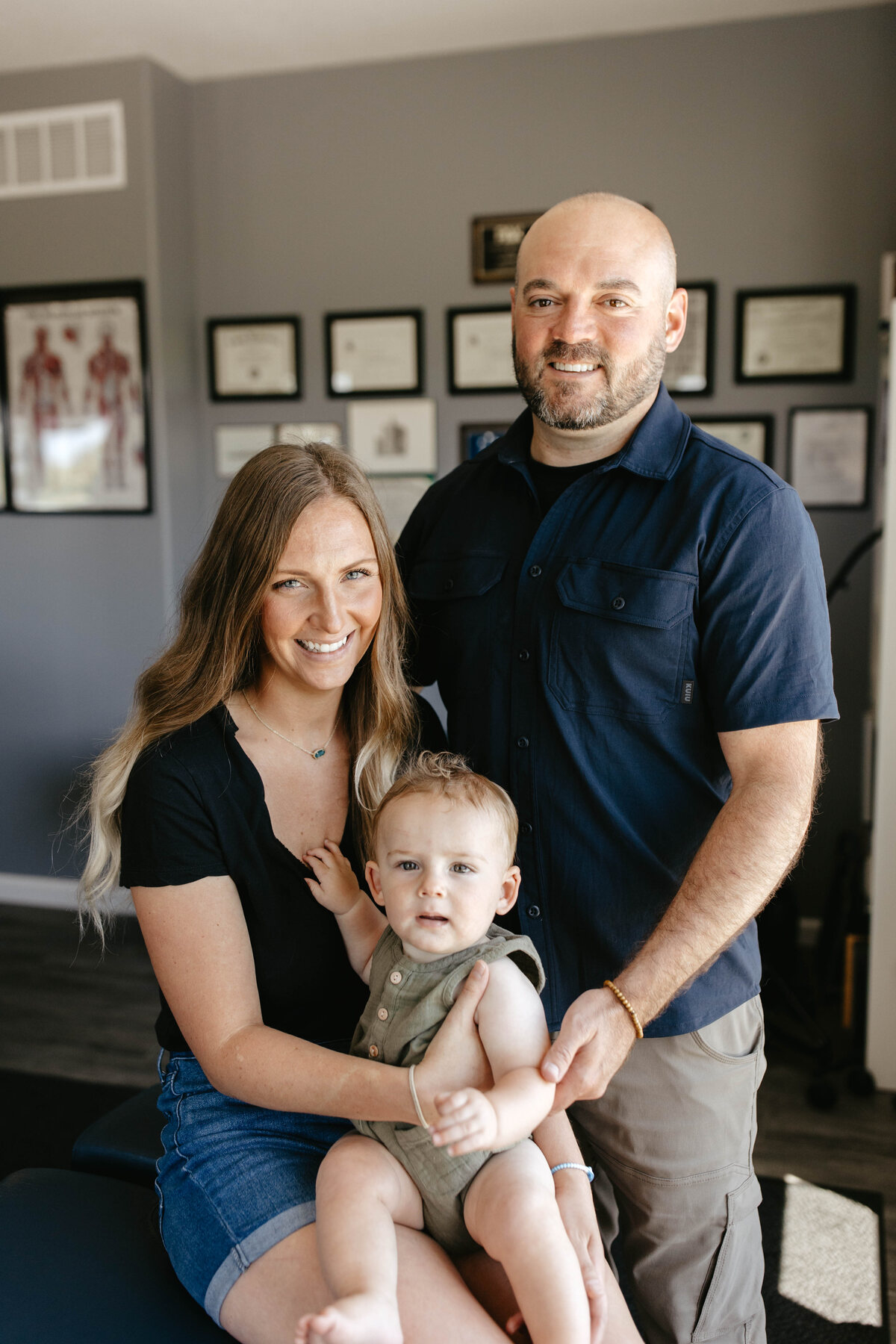
A Practice Built Together
The practice may carry Dr. Miller’s name, but it has never been a one-person effort. Chelsea Miller, Operations Manager, leads office operations, patient scheduling and communication, and the practice’s social media—helping people feel welcomed and cared for from their first contact.
Together, Dylan and Chelsea support patients through the Grant City, Missouri, and Des Moines, Iowa locations.